
7 Signs You Might Be a Good Candidate for a Breast Lift

There is a particular kind of moment many women know quietly and never talk about. You catch your reflection while changing, or you notice how different your breasts look in a photo compared to a few years ago, and a small thought settles in. Something has changed, and you are not sure how you feel about it.

If you have been having that thought more often lately, you are not alone, and you are not overreacting. Pregnancy, nursing a baby and changes in weight can stretch skin beyond what it can naturally bounce back from. For some women, this shift is barely noticeable. For others, it changes how they feel in their clothes, in the mirror, and in their own skin. At AEONA, this is one of the most common concerns women bring into their first conversation with us, and it is exactly why breast lift surgery exists.

But how do you know if what you are experiencing is simply a passing phase, or a genuine sign that a breast lift could help? This blog walks you through seven clear signs worth paying attention to. Also, learn what a breast lift actually involves, so you can make sense of what you are feeling with real information instead of guesswork.

What Does a Breast Lift Actually Correct?

A breast lift, medically known as mastopexy, is a procedure that treats breast ptosis, which is the medical term for drooping or sagging breasts. Over time, breast tissue can lose volume, and the skin around it can lose its elasticity, causing the breasts to sit lower than they once did.

A breast lift works by lifting the breast tissue back to a higher, more youthful position, tightening the loose skin, and reshaping the contour of the breast. In many cases, the nipple and areola are also repositioned so that they sit naturally on the newly lifted breast, rather than looking out of place with the new shape.

It is worth understanding early on that a breast lift surgery is different from a breast augmentation. A lift does not usually add volume on its own. It works with the tissue you already have, reshaping and repositioning it. If you want both a lift and added fullness, that is a separate, combined approach that your surgeon will discuss with you based on your body and your goals.

With that understanding in place, here are the signs that tend to show up most often in women who go on to choose a breast lift.

7 Signs You Might Be a Good Candidate for a Breast Lift

These are the signs that show you need a breast lift:

1. You Are Constantly Relying on Push-Up or Padded Bras

If your everyday bra drawer is full of padding, underwire, and push-up styles, and you cannot imagine leaving the house without one, this is one of the clearest signs your breasts may have lost their natural lift. Many women describe this as uncomfortable and, frankly, exhausting. You should not have to engineer your outfit around your undergarments every single day. When your breasts no longer hold their shape without help from a bra, it usually points to a loss of skin elasticity and internal support, which is precisely what a breast lift is designed to correct.

2. Your Breasts Have Lost Their Upper Fullness

Take a moment to think about how your breasts looked in your twenties compared to now. One of the most common changes women notice is a loss of fullness in the upper part of the breast, sometimes called the upper pole. When this area becomes flat or hollow, the breast can start to look deflated even if the lower part still has volume. This is a very specific, physical sign, not just a feeling, and it is one of the main things a breast lift is designed to restore.

3. Your Nipples Sit Lower Than They Used To

This is a sign that is easy to miss because it happens so gradually. But if you notice that your nipples now point downward or sit at or below the natural crease under your breast, rather than facing forward, it is a strong physical indicator of breast ptosis. Surgeons often use the position of the nipple relative to this crease as one of the key measurements when assessing whether a lift is appropriate for you.

4. Your Skin Feels Stretched, Loose, or Less Elastic

Run your hand gently across your breast. Does the skin feel thinner or looser than you remember? Pregnancy, breastfeeding, and changes in weight can stretch the skin beyond its natural ability to bounce back. Unlike other tissue in the body, breast skin does not always retighten on its own once it has been stretched. If this loose, less elastic feeling is something you have noticed, it is a sign worth discussing with a specialist rather than trying to manage with creams or exercises that were never designed to fix skin laxity.

5. Your Areolas Have Widened

Alongside changes in nipple position, many women notice their areolas, the darker skin around the nipple, have become wider or less defined over time. This often happens together with a loss of breast volume and skin elasticity. A breast lift surgery typically addresses this alongside the overall reshaping, so the areola is brought back to a more proportionate size as part of the same surgery, rather than being treated separately.

6. Your Breasts Sit Noticeably Lower on Your Chest Wall

Beyond the nipple position, pay attention to where the breast tissue itself sits on your chest. If your breasts feel like they have “dropped” and now rest lower than they used to, even when you are standing straight, this is one of the more visible signs of sagging. It is often the change that women notice first in the mirror, and it tends to be the one that affects how clothes, especially fitted tops and dresses, sit on the body.

7. You Feel Less Confident or Less Like Yourself

Not every sign is physical. Sometimes it is simply a feeling. Many women have already mentioned that they often feel less youthful, less confident, and somehow disconnected from how their body used to feel and look. Only a woman can understand that this emotional shift is as important as any physical change they might feel. If you also avoid specific outfits, swimwear, or even intimacy with your partner because of how your breasts have become, you should think about a breast lift. That discomfort is an absolutely legitimate reason and not something you should brush off.

If two or more of these signs sound familiar, it is a strong indication that a conversation with a specialist could be worthwhile. None of these signs needs to be extreme or dramatic to be valid. Even subtle versions of these changes are enough reason to have an informed discussion about whether breast lift surgery is right for you.

How Breast Lift Surgery Actually Works

So what actually happens once you’re on the table? It’s a fair question, and you deserve a straight answer before you decide anything. In simple terms, the surgeon removes the excess skin that has stretched out over the years and pulls the remaining breast tissue up higher on the chest wall, where it used to sit. Your nipple and areola get repositioned too, so everything lines up naturally with the new shape instead of looking pulled or artificial. Most women are surprised to hear the whole thing wraps up in two to three hours. Now, not every breast needs the same fix, so there isn’t just one version of this surgery. Depending on what’s going on with your body, your surgeon might suggest:

  • A lift on its own: No implants, no added volume, just your own tissue reshaped and lifted back into place.
  • A lift combined with implants: This tends to be the right call for women who have lost fullness along with the sagging, whether that’s from pregnancy, weight loss, ageing, or simply genetics. You get the lift and the volume back in one go.
  • The Internal Bra Technique: Think of it as built-in, long-term support. A surgical mesh is placed inside the breast to hold everything in position from the inside out, so the lift has a better chance of staying put over the years instead of slowly giving in to gravity again.

At AEONA in Gurugram, Dr. Amit Gupta has spent over 22 years perfecting these techniques. One approach he’s known for is the Aeona Elevate Technique, which blends submuscular and subglandular implant placement, also called the dual plane method. It’s particularly well suited to women dealing with both sagging and a hollowed-out upper chest, and the muscle essentially takes over some of the support work, which is what gives the results their natural curve and staying power.

What You Can Expect After Your Breast Lift

Understanding recovery expectations honestly is just as important as understanding the procedure itself. Immediately after surgery, you will notice a visible change in the shape and position of your breasts. It is normal for scars to appear red or slightly raised in the beginning. This is not permanent, and those scars from a breast lift do fade considerably over time, especially with proper aftercare.

You might also notice your bra size decreasing slightly after the procedure. This is not a loss of volume. It happens because the breast tissue is firmer and sits higher, which changes how it measures rather than how much of it there is.

Final results are typically visible within three to six months, once swelling has fully subsided and the breasts settle into their new shape. From there, maintaining a healthy, stable lifestyle helps preserve your results for the long term, though it is honest to acknowledge that ageing, gravity, and future life changes like pregnancy can still influence how your breasts look years down the line. This is simply the nature of the body, and it does not take away from how meaningful the results can be in the years immediately following your surgery.

Why Women Choose AEONA for Their Breast Lift Journey

Deciding to move forward with breast lift surgery is one part of the equation. Deciding who you trust to perform it is the other, and honestly, that part matters just as much. At the practice, our team behind every procedure brings a combined 65 or more years of expertise, with over 25,000 procedures performed and more than 75,000 patients consulted across 41 nationalities. That is not a small number, and it reflects a level of experience that comes from having seen almost every version of the concerns you might be carrying into your first consultation. A few things set the experience apart:

  • Scarless and painless techniques: The practice uses advanced, minimally invasive methods designed for a smoother, more comfortable recovery, so healing does not have to feel like an ordeal on top of everything else.
  • A confidential, patient-first approach: Every consultation is handled with the discretion and privacy this kind of decision deserves. Nothing about your body or your choices needs to be anyone else’s conversation but yours.
  • 3D Simulation tool: Before you commit to anything, you can actually preview a realistic, personalised version of your potential results on your phone. It takes a lot of the guesswork and the anxiety out of the decision.

None of this replaces an actual conversation with a surgeon about your specific body and your specific goals. But it should tell you that if you do decide to explore a breast lift, you deserve to do it somewhere that takes the decision as seriously as you do.

Your Transformation Starts With One Honest Conversation

Noticing these signs in yourself is not vanity, and it is not something to feel guilty about. Your body has carried you through pregnancies, weight changes, and years of life, and it is completely reasonable to want it to feel like yours again.

This is exactly the space AEONA was built for. We know a consultation like this deserves privacy, honesty, and care that actually feels personal, not rushed. Led by Dr. Amit Gupta and a team with decades of combined expertise, that’s precisely what we aim to offer every woman who walks through our doors. No pressure, no sales pitch. Just a clear, judgement-free conversation about what your body needs and what results are realistically possible for you.

If even one or two of the signs above felt familiar while reading this, that is worth listening to. Schedule a consultation with us for breast lift surgery and start the conversation about the transformation you have been quietly thinking about. Your reflection deserves to feel like home again.

Breast Augmentation Surgery: How it Works and Recovery Tips

Breast augmentation surgery is designed to enhance breast volume, shape and symmetry using implants or, in selected cases, fat grafting. Whether you are a suitable candidate depends on your breast anatomy, skin quality, medical history, expectations and the type of result you want.

Let’s be honest about something most women don’t say out loud. You can eat right, work out, dress well, and still feel like your body is missing a piece of the picture you had in your head. For a lot of women, that missing piece is their breasts, whether it’s size, shape, or the way things have changed after pregnancy or weight loss. If any of this sounds familiar, you are far from alone, and you are not asking for too much by wanting a change. This feeling often builds slowly, over years of comparing yourself to others, avoiding certain outfits, or simply learning to settle for less than what you actually wanted for your own body.

This is exactly the space we built AEONA for. Breast augmentation has become one of the most sought-after ways for women to feel at home in their own bodies again. This blog walks you through what the procedure actually involves, how it works step by step, and what recovery genuinely looks like, so you can make an informed decision instead of relying on guesswork or hearsay. Whether you are only just starting to explore the idea or you have already been thinking about it for months, understanding the real details can make the entire process feel far less intimidating.

Why Women Consider Breast Augmentation

Before getting into the surgical details, it helps to understand why this conversation is even happening in the first place. The reasons women consider breast augmentation surgery are rarely vain or impulsive. They are usually deeply personal, and often connected to years of quiet discomfort that gets carried silently, without ever being spoken about out loud. Here are some of the most common experiences women share:

  • Clothes that never fit as they should, no matter the size or the brand, leading to a never-ending cycle of tailoring and disappointment. 
  • Uncomfortable padded bras worn every day just to have the appearance of shape, often at the expense of comfort.
  • Ongoing disappointment with their breast shape or size, something they’ve quietly carried since their teenage years and never really shaken off
  • Steering clear of fitted or stylish outfits because the confidence just isn’t there, even for occasions that deserve it
  • Dealing with teasing or careless comments about their body, sometimes from strangers, sometimes from family, and sometimes even from partners who should know better
  • Feeling overlooked or less attractive, even in their own relationships, in a way that slowly chips away at self-worth without anyone really noticing

If several of these concerns sound familiar, a consultation can help you understand whether breast augmentation is an appropriate option for your anatomy and goals. This isn’t about chasing a different look for the sake of it. It’s about taking your confidence back, owning your femininity on your own terms, and actually feeling good in the body you wake up in every day. For most women, this decision isn’t really about wanting something new. It’s about wanting to feel like themselves again, the way they always pictured it.

What Is Breast Augmentation Surgery?

In simple terms, breast augmentation is a surgical procedure aimed at enhancing, enlarging, symmetrising, and reshaping the breasts. It gives women with naturally smaller breasts, uneven breasts, or breasts that have changed after pregnancy or weight loss a way to restore volume and proportion. It is a procedure that has evolved considerably over the years, and today it is approached with far more precision and personalisation than it once was. This is not a single fixed method. You can achieve the results in several different ways; whichever suits you best and provides you with your desired outcome. However, that depends on your body, your goal, and your surgeon’s recommendations. Here are the methods:

Breast Implants

These implants are made of medical-grade silicone and are designed to add volume and shape to the breasts. For a woman with an almost flat chest, even a small implant can be transformative, changing not just the silhouette but the way clothes fit and how she carries herself. Implants can also be used for women with minor breast sagging, either with or without a lift, depending on the clinical situation and the extent of correction needed.

Choosing the right implant size is one of the most important decisions in this journey, and it should always be made after a proper consultation with your surgical team, rather than based on trends, photographs of other women, or assumptions about what might suit you. What looks right on one body frame may not translate the same way on another, which is why this step deserves real attention rather than a quick decision.

Breast Fat Injection

For this method of breast augmentation surgery, the fat is taken from another part of your own body and injected into the breast to enhance shape and size. It is usually preferred by women who do not want implants and are looking for a slight enhancement in volume rather than a dramatic change. Fat injection is also commonly used to enhance cleavage, including after an implant procedure, giving a more rounded and complete final result. It is important to know that this technique cannot achieve significant breast enlargement on its own, and more than one session may be required to reach the desired outcome.

Breast Fillers

Fillers can be used to add volume to the breast as a simple office procedure. This route is usually chosen by women who do not want an implant or are too thin for a fat transfer, and it offers a way to test out a subtle change without committing to surgery. It is worth remembering that fillers are temporary and typically do not last beyond six months, so they work better as a short-term option rather than a lasting solution, and are best understood as a trial rather than a permanent transformation.

Types of Breast Implants

If implants are the direction you choose for your breast augmentation surgery, it helps to understand what your options actually mean. Each type is designed for a slightly different outcome, and the right combination depends entirely on your anatomy and your aesthetic goals.

Silicone and the Feel of the Implant

Silicone implants are pre-filled with a gel that feels remarkably close to natural breast tissue, which is exactly why so many women gravitate towards this option. It’s not just about the look. It’s about how it feels under your fingers, how it settles into place, and how natural it feels whether you’re standing at the mirror, sitting at your desk, or lying down at the end of the day. That softness and realistic movement are what make silicone such a popular choice for women chasing a natural, believable result.

Smooth Versus Textured Implants

  • Smooth implants move a little more freely inside the breast pocket, which gives them a softer, more natural feel when you move. The flip side is that they can shift slightly more over time, so your surgeon will keep this in mind while deciding the best placement technique for you.
  • Textured implants grip the surrounding tissue a bit more securely. This keeps movement to a minimum and lowers the risk of complications, helping the implant stay exactly where it’s placed after your breast augmentation surgery. Depending on your body type and how active your lifestyle is, this can end up being the more practical choice.

Teardrop, Round, and Ergonomic Implants

  • Teardrop implants follow the natural slope of the breast, so the result looks subtler and blends in more convincingly. If you’re after a gentler transformation rather than a dramatic size jump, this shape tends to work in your favour.
  • Round implants give you a fuller, more lifted look with noticeably better cleavage. Even if they shift slightly, they stay symmetrical, which is why they’re such a favourite among women wanting a bold, youthful look with real volume up top.
  • Ergonomic implants are built with a special gel that moves with your body. Lie down, and they settle into a round shape. Stand up, and they shift into a teardrop shape. It’s essentially the best of both worlds, giving you a natural feel no matter what you’re doing throughout the day.

Implant Profile: How Much Projection You Want

  • High profile implants project more dramatically from the chest, a good fit if you’re looking for a noticeable, significant change without adding width.
  • Ultra high profile implants take that even further, offering maximum projection on a narrower base. You get a fuller, perkier look and better cleavage, without your chest looking wider than it should.
  • Moderate profile implants find the middle ground between projection and width, giving you a fuller look that still feels natural rather than overdone.
  • Low profile implants sit flatter with a wider base, offering the least projection. If you have a broader chest or simply want a subtle, understated change, this is usually the better fit.

None of these breast augmentation options is universally “better.” The right choice depends entirely on your body frame, your existing breast tissue, your skin elasticity, and the look you are hoping to achieve, which is why this decision is best made in consultation with your surgeon rather than on your own or based on someone else’s results. A combination that works beautifully for one woman may look entirely different on another, simply because of how differently our bodies are built.

How Breast Augmentation Surgery Actually Works

Understanding the mechanics of the surgery can ease a lot of the anxiety that comes with the unknown. When the process is broken down step by step, it becomes far less mysterious and far less frightening. Here is what typically happens during the procedure.

The Incision

The surgery begins with an incision, and where that incision is placed can influence both scarring and the ease of implant placement. This is one of the more personalised parts of the surgery, since the same incision site does not suit every woman equally. There are three common locations:

  • Inframammary (under the breast fold): This is the most common and well-concealed option, since the scar sits naturally within the breast crease and is rarely visible even in fitted clothing.
  • Periareolar (around the nipple): This gives your surgeon precise control over placement, and the scar it leaves is usually so thin it becomes almost invisible over time, fading right into the natural pigmentation of the areola.
  • Transaxillary (in the underarm): This one skips the breast entirely when it comes to scarring, which is exactly why some women prefer it. Your chest stays completely free of any visible marks.

The right incision site really comes down to your anatomy, the implant you choose, and honestly, your own comfort with it. Your surgeon will factor in your skin thickness, how much natural breast tissue you have, and the implant size you’re going with, then walk you through which approach gives you the most natural-looking result with the least visible scarring.

Creating the Pocket and Placing the Implant

Once the incision is made during breast augmentation surgery, your surgeon creates a pocket, either within the breast tissue itself or beneath the chest muscle, and carefully places the implant inside it, making sure both sides end up looking symmetrical. There are two main ways this is done:

  • Subfascial placement tucks the implant under a layer called the pectoralis fascia. It takes real surgical skill to find this exact plane, but get it right, and you end up with an implant that’s barely noticeable to the touch, good projection, and a lower chance of capsular contracture down the line.
  • Subglandular placement sits the implant in front of the chest muscle, just behind the breast and glandular tissue. Surgeons often lean towards this when a woman already has a decent amount of natural breast tissue, since it creates a smoother, more natural-looking transition between the implant and the chest wall.

Closing the Incision

Once the implant is sitting exactly where it should be, the surgeon closes the incision with sutures, and that marks the end of the surgical part of your journey. Even this last step matters more than people realise. How carefully the incision is closed plays a real role in how the scar eventually heals, so it deserves just as much attention as everything that came before it.

How Long Does the Surgery Take?

Most breast augmentation surgeries take somewhere between one and two hours. The exact time depends on how complex your case is and whether you’re combining it with something else, like a lift or fat grafting for extra cleavage definition.

AEONA’s Signature Techniques for Natural, Long-Lasting Results

This is where our clinic takes the experience a step further. Led by Dr.Amit Gupta, who brings over 22 years of expertise and has helped more than 27,000 people achieve their dream body, the facility has developed two signature techniques designed specifically for natural, fuller results that last, rather than results that need frequent correction over time.

The Internal Bra Technique

This is a specially innovative technique of breast augmentation performed by our expert plastic surgeon, involving the placement of a supportive net that acts like an internal bra. It supports the implant while helping the breast maintain its shape and form over a very long period. This reduces the reliance on external support garments to hold everything in place.

The Dual Plane Technique

In this method, the implant is placed in a specially created pocket under the muscle, with the breast divided into two planes to allow it to move slightly. The biggest advantage of this technique is a much higher upper pole along with an inward shifting of the breast, which contributes to a fuller, more natural-looking cleavage. Since the majority of the implant is covered by the muscle, palpability of the implant is kept to a minimum, meaning the results feel far closer to natural breast tissue rather than an obvious augmentation.

Together, these techniques are designed to keep implants secure, shapely, and free from the need to depend on external support. It makes them particularly effective for women with minimal breast tissue who want long-lasting, natural-looking results that continue to hold their shape well beyond the initial recovery period.

Recovery After Breast Augmentation Surgery: What to Actually Expect

This is usually the part women worry about the most, and understandably so, since recovery is where the results of the surgery are truly allowed to settle. Here is what the recovery journey genuinely looks like, without exaggeration in either direction.

Immediately After Surgery

In the initial days, you can expect:

  • A supportive bra becomes part of your daily routine, holding your breasts in their new shape and giving the healing tissue underneath the support it needs
  • Some pain and swelling is completely normal, and prescribed medication helps manage it while it gradually eases with each passing day
  • Heavy activity is off the table for a while, so lifting, bending, or any sudden movement that strains your chest needs to wait until your body is ready
  • You’ll have follow-up visits scheduled in, giving your surgeon a chance to track how you’re healing and catch anything early if it needs attention

Most of the discomfort fades within a few weeks, so yes, the first stretch asks for some patience, but it really is temporary rather than something you’ll be dealing with long-term. If anything, many women find the early days feel more restrictive than painful. You’re moving carefully and taking it slow, but the discomfort itself tends to ease up faster than most women expect going in.

Getting Back to Daily Life

Most women are back to work and easing into light activities within about a week, especially if their job doesn’t demand much physical effort. That said, exercise and anything strenuous need to stay on hold for four to six weeks, and your surgeon will guide you on the exact timeline based on your case. There’s a real reason behind this waiting period. Jumping back into intense activity too soon can interfere with healing and even undo weeks of progress, which is the last thing you want after going through the surgery in the first place.

Post-Operative Care Essentials

How well you take care of yourself after surgery makes a bigger difference than most people expect, both for how smoothly recovery goes and how your final results actually settle. More often than not, when recovery drags on longer than it should, it’s because one of these steps got rushed or skipped altogether. Here’s what actually matters:

  • Keep your incision sites clean, and stick to the exact routine your surgical team gives you, even on days it feels like a hassle
  • Wear your compression garments as advised, even once the swelling starts going down, and they feel a little unnecessary
  • Take every prescribed medication exactly as directed, and don’t stop early just because the pain feels manageable
  • Follow your surgeon’s guidance on activity restrictions, including how you sleep and how much you move your arms
  • Show up to every follow-up visit, no exceptions, since these check-ins are usually where small issues get caught before they turn into bigger ones

Understanding the Risks

No honest conversation about breast augmentation surgery skips over the risks, and this one won’t either. Infection, scarring, changes in sensation, implant rupture, asymmetry- these are all real possibilities, not just fine print. This is exactly why the surgical team you choose matters so much, and why nothing should feel glossed over during your consultation. If your surgeon takes the time to walk you through all of this honestly, without sugarcoating it, that’s usually a good sign they care about your well-being and not just how the end result looks.

Breast Augmentation Myths vs Facts: Separating Truth from Fear

Women who have never struggled with their body will probably never understand a very specific kind of exhaustion. The one that comes from trying on five different outfits before a night out, and still catching yourself in the mirror wondering why nothing looks quite right. For some women, that feeling comes from breasts that once looked and felt exactly the way they wanted, before pregnancy and childbirth changed that quietly and permanently. So let’s be honest about something first. You didn’t land on this blog because you’re bored. You landed here because you’ve been thinking about breast augmentation for a while now, maybe quietly, maybe for months. And if you’ve spent hours scrolling through forums, half reading horror stories, and closing tabs out of pure anxiety, you are not alone.

Breast augmentation surgery is one of those topics where everyone seems to have an opinion, but very few people actually have the facts straight. At AEONA, we meet women every week who arrive at their first consultation carrying more fear than curiosity, simply because of what they have read online. So let’s slow down and go through this properly. This blog separates what is actually true about breast augmentation from what is just noise, so you can make a decision based on facts, not fear.

Why Do Breast Augmentation Myths Spread So Easily?

Cosmetic surgery is personal, and personal topics attract a lot of false narratives. A friend’s cousin had one bad experience, someone read an outdated article, and suddenly it became “common knowledge.” The good news is that most of these myths fall apart the moment you look at how breast augmentation surgery is actually performed today.

Top Most Common Myths of Breast Augmentation

Here they are:

Myth 1: Breast Augmentation Only Means Implants

The fact: Breast augmentation can be performed using breast implants or, in selected patients, fat transfer. The appropriate option depends on your anatomy, desired increase in volume, available donor fat and treatment goals.

  • Implants add volume and shape and work well for women with a naturally flatter chest or minor sagging.
  • Fat injection uses fat from your own body to enhance shape and volume, and is a good option if you want a subtle enhancement without implants.
  • Fillers can enhance volume as an office procedure for women who want a temporary change, though these typically last up to six months.

Myth 2: One Implant Size Fits Everyone

The fact: There is no universal “right size.” Implants vary by profile (low, moderate, high, and ultra-high), shape (round, teardrop, or ergonomic), and surface texture (smooth or textured). The right combination depends entirely on your body frame, your skin quality, and the look you want to achieve. This is exactly why a proper consultation matters more than any online size chart.

Myth 3: You Will Be Left With Big, Visible Scars

The fact: This is one of the most exaggerated fears out there, probably because scars are the one thing everyone imagines but nobody actually sees in person. In reality, the incision can be placed in the crease under the breast, around the nipple, or even in the underarm, and which one is used depends on your body and the implant you choose. Yes, a scar does form; that part is true. But with the right surgical technique and proper aftercare, it fades a lot more than people expect, to the point where most women stop thinking about it entirely.

Myth 4: Recovery Takes Months and Months

The fact: Recovery is far shorter than most people assume. Most women return to work and light activities within a week. Strenuous activity and exercise are usually avoided for about four to six weeks, and discomfort generally fades within a few weeks with a supportive bra and prescribed medication.

Myth 5: Implants Have to Be Replaced Every Few Years

The fact: A lot of women quietly worry about this one, picturing another surgery every couple of years. That’s just not how it works. Breast implants are built to last, typically somewhere between 10 and 20 years, and regular check-ups are simply about staying on top of things, not bracing for a replacement. Think of it less as a temporary fix and more as a long-term decision you’re making for yourself.

Myth 6: You Won’t Be Able to Breastfeed Afterwards

The fact: This is a real concern, and it deserves a real answer instead of a blanket yes or no. Certain incision types, like the periareolar approach, can affect breastfeeding for some women, but plenty of women go on to breastfeed successfully after augmentation. What matters most here is having an honest, specific conversation with your surgeon about your own body and your plans for the future, because this isn’t something a generic answer can cover.

Myth 7: Breast Augmentation Is Extremely Risky

The fact: Like any surgical procedure, breast augmentation does carry risks, including infection, scarring, changes in sensation, implant rupture, and asymmetry. What actually reduces these risks is choosing the right surgical technique and an experienced surgical team who can walk you through every possibility honestly, rather than glossing over them.

Myth 8: It’s Only for Women Who Want to Look “Fake”

The fact: Breast implants can be positioned in different anatomical planes, including above or partially below the pectoral muscle. The choice depends on your breast tissue, skin quality, anatomy, implant characteristics and desired appearance. The goal is to create a proportionate and natural-looking result rather than a visibly artificial appearance.

Myth 9: It’s Unaffordable

The fact: Cost is often the silent reason women put off even looking into this, assuming it’s out of reach before they’ve checked. In India, breast implant surgery usually falls between INR 1,25,000 and INR 3,00,000, and where you land in that range depends on the implant type, your surgeon’s expertise, and the clinic itself. Pricing is also shaped around your personal goals, so if you’re combining procedures, that gets factored in too. And if paying it all upfront isn’t realistic, EMI options exist so cost doesn’t have to be the thing standing between you and a decision that’s otherwise right for you.

Begin Your Breast Augmentation Journey with AEONA

Every myth around breast augmentation usually comes from somewhere, but very few of them hold up once you actually understand the procedure. What you deserve is clarity, not confusion, and a team that treats your questions with the seriousness they deserve. At AEONA, every consultation begins with listening, not selling, because your comfort and confidence matter more than convincing you of anything. If you have been sitting with questions about breast augmentation surgery for a while now, let this be the moment you get real answers. Schedule a consultation with us and take the next step towards the body you have been imagining for yourself.

Are You a Good Candidate for Breast Augmentation? 7 Signs It’s Time

Breast augmentation may be suitable for women who want to improve breast volume, shape, symmetry, or body proportion and are medically fit for surgery with realistic expectations. At AEONA, we meet women like this every day, and we have learned that the decision to explore breast augmentation rarely comes from vanity. It comes from wanting to feel whole in your own skin.

A consultation with a qualified plastic surgeon is the best way to determine whether implants or fat grafting are appropriate for your anatomy and goals. So, if you have been quietly wondering whether breast augmentation surgery is right for you, this blog will help you recognise the signs that usually mean it is time to take the next step.

What Breast Augmentation Actually Involves

Breast augmentation is a surgical procedure that enhances, enlarges, and reshapes the breasts to create better balance and symmetry with your body. It can be achieved in more than one way, and the right approach depends entirely on what you want to see in the mirror. Here are the ways:

  • Breast implants: They add volume and shape using medical-grade silicone. Even in a very flat chest, a well-chosen implant can be transformative, and implants can also be combined with a lift when there is mild sagging.
  • Breast fat injection: These injections use fat taken from your own body to add a slight enhancement without implants. It cannot create a dramatic size change, and more than one session may be needed.

7 Signs You May Be a Good Candidate for Breast Augmentation

These are common reasons women begin considering breast augmentation:

1. Your Clothes Never Seem to Fit Right

You buy a dress you love, but it never sits the way it does on the hanger. Necklines gape, tops pull, and you keep adjusting through the day. When your clothes are constantly at war with your body, that mismatch often points straight to breast size and shape as the underlying reason.

2. You Are Done With Uncomfortable, Padded Bras

Padded bras exist to create an illusion. If you find yourself layering pads just to feel presentable, or living in underwire that digs in more than it supports, you are patching a problem instead of solving it. Many women turn to breast augmentation surgery precisely so they can stop relying on padding altogether.

3. You Feel Disappointed With Your Breast Shape or Size

This is one of the most honest signs there is. Maybe your breasts feel too small for your frame, uneven in shape, or simply not what you pictured for yourself. When that quiet disappointment lingers month after month, it is worth listening to rather than pushing aside.

4. You Avoid Outfits You Would Genuinely Love to Wear

A bikini on vacation. A fitted dress for a wedding. A backless blouse you saw online and instantly liked. If you keep talking yourself out of these choices because of how your chest looks in them, you are editing your wardrobe around a body you have not fully accepted yet.

5. You are Tired of Unwanted Comments

External comments should never define whether someone chooses surgery; the decision should always come from your own goals and well-being. Careless remarks from classmates, colleagues, or even family members can sit with a woman for years. If comments about your chest have ever made you flinch, cover up, or lose confidence in a room, that experience matters. It is one of the most common and valid reasons women consider augmentation.

6. You Feel Less Confident or Desirable in Your Relationship

Intimacy asks for a certain ease with your own body. When insecurity about your breasts creeps into how comfortable you feel with a partner, it can quietly affect connection and confidence. For some women, body confidence can influence how comfortable they feel in intimate relationships, and this may become one of several personal reasons to explore augmentation.

7. You Want a Natural, Personalised Outcome, Not a Generic Fix

Not every woman wants the same result. Some want a subtle lift in volume, others want a fuller, more noticeable change. If you already know the kind of transformation you want, rather than a one-size-fits-all fix, you are already thinking like a good candidate. This is where a proper consultation, tailored to your body type and goals, becomes essential.

Why the Right Approach Matters

No two women want the exact same result from breast augmentation surgery, so it makes little sense to treat every patient the same way. At AEONA in Gurgaon, surgical planning may include techniques such as Dual Plane breast augmentation and Internal Bra support in appropriately selected patients, depending on anatomy, implant choice, and the degree of support required.

Even the smallest details are decided with your body in mind, not a template. Where the incision goes, whether inframammary, periareolar, or transaxillary, and which implant type or placement suits you best all come down to your anatomy and the look you actually want to walk away with. That is really the heart of it. A good result comes from surgery, but a natural one comes from a surgeon who took the time to plan around you first, which is exactly why the consultation matters just as much as the operation itself.

Ready to Explore Whether Breast Augmentation Is Right for You?

Recognising these signs in yourself is not a small thing. It takes courage to admit that you deserve to feel comfortable, confident, and proud of your own body. If two, three, or all seven of these signs sound familiar, you are not imagining it, and you are not alone.

Recognising these signs in yourself is not a small thing. It takes courage to admit that you deserve to feel comfortable, confident, and proud of your own body. If two, three, or all seven of these signs sound familiar, you are not imagining it, and you are not alone.

AEONA has spent years helping women move from quiet self-doubt to real, lasting confidence through carefully personalised breast augmentation. With an experienced surgical team, advanced techniques like the Dual Plane and Internal Bra methods, and a private, patient-first approach, your transformation is planned around you, not around a template. If you have been waiting for a sign, consider this. Book a consultation with us and start the conversation your body has been asking for.

Breast Augmentation in India: Cost, Procedure, Results & Recovery (2026 Guide)

Breast augmentation in India has become one of the most popular and trusted cosmetic surgeries today. Whether it’s for enhancing size, correcting asymmetry, restoring volume after weight loss or pregnancy, or part of gender-affirming surgery, breast implant surgery is now widely chosen by celebrities, models, working women, and even homemakers. Breast enlargement surgery is no longer limited to the glamour world; it has become a safe, reliable, and accessible procedure for anyone who wants a more confident and proportionate body shape.

If you’re searching for breast augmentation in India or specifically breast augmentation in Delhi, it’s important to look beyond just “price” and understand factors like surgeon experience, hospital standards, implant types, technique, and your final aesthetic goals.

The result of breast augmentation stays with you for years, so choosing the best breast augmentation surgeon in Delhi becomes extremely important.

In this 2026 guide, you’ll find everything you need to know — from breast augmentation cost in India, implant types, procedural steps, recovery timeline, risks, and realistic expectations. 

This guide keeps explanations simple and clear, in the same style and tone you wrote, but corrected for grammar and readability.

Why Breast Augmentation Is So Popular in India

Breast implant surgery is one of the highest-performed cosmetic procedures performed worldwide, and India is no exception. In fact, the demand for silicone breast implants in India has increased dramatically because:

  • Modern implants are safer, softer, and long-lasting
  • Results look natural and proportionate
  • Techniques like dual-plane placement give better shape
  • Cost is affordable compared to many Western countries
  • It is commonly chosen by celebrities, influencers, and working women
  • It is also a key part of gender-affirming surgery for trans women


In today’s world, women choose breast augmentation not just for “looks” but for confidence, better clothing fit, femininity, and personal comfort.

Key Methods of Breast Augmentation

Breast enlargement surgery can be done in three main ways. All aim for enhancement but differ in technique, longevity, and suitability.

1. Breast Augmentation with Silicone Implants (Most Popular)

This is the most common, reliable, and long-lasting method.
Modern silicone implants are soft, natural-looking, and come in multiple shapes, sizes, and projections.

At Divine Aesthetics, the commonly used implants are Motiva and newly added lifelong GC implant

These implants come with warranties and excellent durability. Silicone implants are ideal for those who want a noticeable and permanent enhancement. They remain the gold standard for natural-looking breast augmentation in India.

TYPES OF BREAST IMPLANTS 

Smooth Implants

  • Smooth implants can move freely inside the breast pocket
  • Gives a natural feel.
  • They may be more likely to shift over time.

Textured implants

  • Textured implants are designed to adhere to the surrounding tissue more securely
  • It reduces movement and the risk of complications.
  • They help keep the implant in place after surgery.

Teardrop implants

  • Teardrop implants have a natural slope that mimics the shape of the breast,
  • It provides a more natural look.
  • They are often recommended for patients seeking a subtle enhancement.

Round Implants

  • Round implants give fuller, more lifted breasts with enhanced cleavage.
  • They offer a balanced shape and stay symmetrical even if rotated.
  • They are the ideal choice for a bold & youthful look.

Ergonomic Implant

  • Ergonomic implants use a special gel that allows them to adapt to the body’s natural movement.
  • They provide a round shape when lying down and a teardrop shape when standing, offering a balance between the benefits of both round and teardrop implants.
  • This can result in a more natural feel and look.

High, Ultra High, Moderate, & Low Profile Implants

  • High-profile implants have a more dramatic projection from the chest, offering a fuller look for those seeking significant enhancement.
  • Ultra-high-profile implants give maximum projection with a narrow base. They create a fuller & perkier look. It is ideal for those who want a dramatic volume change and enhanced cleavage without wider breasts.
  • Moderate profile implants offer a balanced projection and width, creating a natural, fuller look without looking overly round or prominent.
  • Low-profile implants are flatter with wider bases, giving minimal projection, perfect for broad chests and those wanting a subtle enhancement.

2. Breast Augmentation with Saline Implants

Saline implants have a silicone shell but are filled with sterile saltwater during surgery.

 Advantages include:

  • Very small incision
  • If the implant ever ruptures, saline is safely absorbed by the body
  • Easier detection of rupture

But, saline implants feel slightly firmer and less natural than silicone, which is why silicone implants are more popular in India today.

3. Fat Transfer Breast Augmentation

Fat grafting uses your own body fat to subtly increase breast volume.
Important facts:

  • Not suitable for large increase in size
  • Mostly used for enhancing cleavage, correcting asymmetry, or giving a soft natural contour
  • Around 60–70% of injected fat gets absorbed
  • Often needs 2–3 sessions for visible enhancement

Fat transfer is a good option for subtle shaping, but not ideal for significant enlargement. Many surgeons, including Dr. Amit Gupta, use it as a complementary method rather than a replacement for implants.

Breast Implants vs Fat Transfer — What to Choose?

FactorBreast ImplantsFat Transfer
Volume IncreaseExcellent (1–3 cup sizes easily achievable)Mild (half to one cup usually)
Natural FeelHighly natural (especially modern silicone)100% natural (your own fat)
Result PredictabilityVery predictable and stableLess predictable due to fat absorption
Ideal CandidatesWomen wanting significant enhancementWomen wanting subtle shaping or asymmetry correction
Need for Repeat SessionsNot needed for many yearsOften required 2–3 times
ScarringVery small incision (hidden)Tiny needle marks only
MaintenanceVery lowFat may reduce with weight loss

How Breast Implant Surgery Is Done (Step-by-Step)

This section stays close to your original tone but corrected for clarity.

The first and most important step is consultation.
Here, you discuss goals, shape preferences, lifestyle, clothing style, and body proportions so the surgeon can guide you toward the best implant choice.

Divine Aesthetics offers a 3D surgery simulator that helps you see a preview of how your breasts may look with different sizes. This makes decision-making simpler and realistic.

Procedure Steps

1. General anesthesia is administered.

2. The surgeon makes a small incision — either

  • Inframammary fold (most common)
  • Periareolar (around the nipple)

3. A pocket is created for implant placement, using one of the following methods:

  • Subglandular
  • Subfascial
  • Dual Plane Signature Technique by Dr. Amit Gupta (gives the most natural results)

4. The implant is placed carefully into the pocket.

5. Incisions are closed with sutures under the breast fold for minimal visibility.

6. You are monitored in recovery and discharged the same day or next morning.

The entire procedure usually takes 45–90 minutes.

Schedule a Consultation for Breast Augmentation Cost & Treatment Planning

Who Should Choose Which Procedure?

Goal / Body TypeBest OptionWhy
Want a big size increaseSilicone ImplantsSafest, most predictable, long-lasting
Want completely natural materialFat TransferUses your own fat for shaping
Thin women with very little breast tissueDual Plane Silicone ImplantGives natural slope and better coverage
Want minimal downtimeImplants (subglandular/subfascial)Faster recovery and less discomfort
Want cleavage enhancement onlyFat TransferSubtle correction without implants
Trans women seeking feminine fullnessBig silicone ImplantsOffers volume, projection, and shape reliably

Choosing the Right Implant

Implants come in different:

  • Sizes
  • Shapes
  • Projections (high, moderate, ultra-high)
  • Surface types (smooth or textured)

Your body frame, chest width, height, and desired outcome help determine the right pair. Dr. Amit Gupta’s approach focuses on proportion, natural movement, and long-term comfort.

Cost Breakdown: Breast Augmentation Cost in India (2025)

The average breast augmentation cost in India ranges from:

₹1.5 lakh to ₹2.5 lakh

Cost depends on:

  • Surgeon’s experience
  • Implant brand
  • Hospital/OT quality
  • Post-operative care
  • Additional procedures (fat grafting, breast lift, etc.)

 Cost Comparison Table (India, 2025)

Item / FactorSilicone ImplantsSaline ImplantsFat Transfer
Average Cost (India)₹1.5–2.5 lakh₹1.2–2.0 lakh₹80,000–1.8 lakh (per session)
Why Cost VariesImplant brand (Sebbin, Motiva, GC), surgeon expertise, hospital standardsSimilar reasons; slightly less expensiveDepends on liposuction area, fat processing, repeat sessions
Longevity vs CostExcellent long-term investmentGood but less durableCost increases if multiple sessions needed

Dr. Amit Gupta, Delhi plastic surgeon with 23+ years of experience and 25,000+ procedures, uses globally accredited implants and advanced techniques, which ensures safe and natural outcomes.

Recovery Timeline

Breast implant recovery time varies based on technique and implant placement.

Recovery usually takes between 6-8 weeks:

Day 1–3

  • Mild discomfort
  • Tightness or pressure
  • Pain medication as prescribed

Day 4–7

  • Most patients return to desk work within 2–3 days
  • Walking is encouraged

Week 2–4

  • Swelling reduces significantly
  • Light exercise allowed after 2 weeks

Week 6–8

  • Implants settle (“drop and fluff”)
  • Full gym and heavy lifting allowed

Most patients resume normal life quickly, making breast implants one of the easiest cosmetic surgeries to recover from.

Why Fat Transfer Alone Is Not as Effective

Fat transfer breast augmentation is often misunderstood.
While it sounds natural and appealing, there are limitations:

  • A large portion of injected fat gets absorbed
  • Cannot achieve big size increase
  • Results vary depending on the body’s acceptance
  • Often used for refinement, not primary augmentation

Fat grafting is best for small corrections, not major enhancement.

Safety & Risks

All surgeries come with potential risks, though they are rare with a qualified surgeon.

Possible risks include:

  • Implant rupture (extremely rare with modern silicone implants)
  • Capsular contracture
  • Temporary numbness
  • Swelling and bruising
  • Infection (very rare with proper sterilization)

Choosing an experienced surgeon dramatically reduces risk and ensures proper management if anything arises.

Before/After Expectation

Realistic expectations are crucial.

What breast augmentation CAN do:

  • Increase size and fullness
  • Improve symmetry
  • Enhance cleavage
  • Give a more feminine and youthful contour
  • Improve clothing fit

What it CANNOT do:

  • Lift very sagging breasts (may need a lift + augmentation)
  • Change body weight or breast shape permanently without maintenance

Patients immediately notice better shape, but final results appear after 6–8 weeks when swelling settles and implants drop into place.

How to Choose the Best Breast Augmentation Surgeon in Delhi

If you want excellent, natural, and safe results, consider:

  • Qualifications and experience
  • Number of breast surgeries performed
  • Before/after gallery
  • Implant options available
  • Technology used (3D simulation, dual-plane technique, etc.)
  • Patient reviews and ratings
  • Hospital quality

Surgeon’s expertise directly affects your final outcome.

How To Make the Right Choice

Breast augmentation in India is safe, predictable, and gives beautiful, natural results when done by an experienced plastic surgeon in India Dr Amit Gupta at Divine Aesthetics. Whether you choose silicone implants, saline implants, or fat transfer, the key is aligning the technique with your goals and body type. But the most popular choice (breast implants) is the best way to breast enhnacement & it also long lasts.

If you have been considering breast enhancement, this blog covers everything, like cost, procedure, recovery, implant options, and what to expect before and after surgery.

A confident, proportionate body shape is completely achievable with today’s advanced techniques, especially when performed at a trusted centre like Divine Aesthetics.

FAQs: 

1. Is breast implant surgery safe? 

Yes, it is safe when done by experienced plastic surgeon 

2. How long it is take for recovery  after breast implant surgery? 

Recovery usually takes between 6-8 week

3. Is breast fat transfer the best option for breast augmentation? 

Breast fat grafting alone cant be the best option but with implant it will give you the best result, nice cleavage and better aesthetics. 

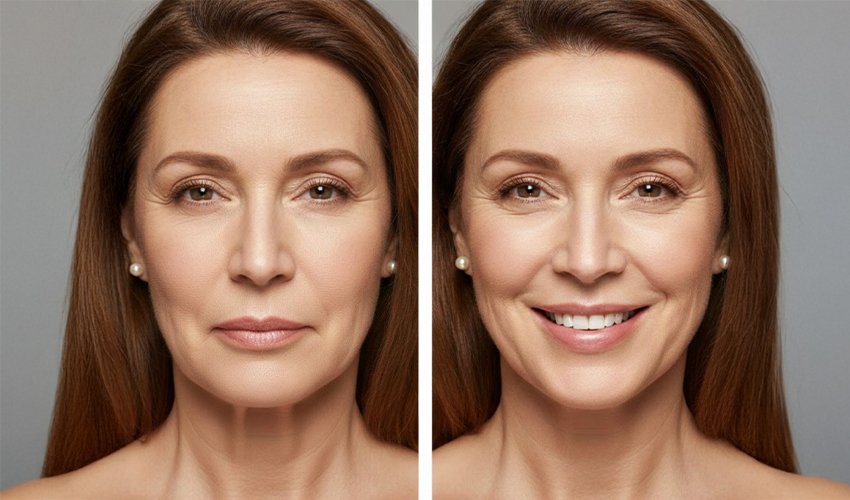
Face lift Plastic Surgery: Complete Guide to Procedure, Recovery & Results

Most people don’t wake up one day and decide, “I need a facelift.”
It usually starts quietly. You look at your old photos. Your cheeks were higher. Your jawline was sharper. Your face looked fresh even without effort. Over time, due to age, sunlight, pollution, stress, and loss of collagen, the face starts to sag. Jowls appear, laughter lines deepen, and the face looks heavier and tired.

The good news is, this is completely reversible. Today, face lift plastic surgery and non-surgical facelift options can make you look 10–15 years younger, naturally and safely, when done by an experienced plastic surgeon.

This face lift surgery guide will help you understand:

  • What face lift surgery really is
  • Non-surgical vs surgical facelift
  • Recovery time
  • Facelift surgery cost in India
  • Results you can expect
  • Who is the right candidate

Why Does the Face Age?

Our face changes with age due to a complex interplay of face skin thinning, fat redistribution on face, bone loss, and weakening of muscle tissues, that leads to wrinkles, aging effects & face sagging driven by less collagen& elastin, shifting of fat pads from one place to another, like loss in undereye and gain in jowls, shrinking facial bones, and gravity’s pull, with sun exposure of UV, food habits, lack of skincare and lifestyle accelerating these natural processes.

Common signs of facial aging:

  • Sagging cheeks
  • Jowls along the jawline
  • Deep smile lines (nasolabial folds)
  • Drooping mouth corners
  • Under-eye bags
  • Loose neck skin and bands

Even a beautiful face can start looking dull and tired when sagging sets in.

What Is Facelift Surgery?

A facelift (rhytidectomy) is a cosmetic surgical procedure where the deeper facial muscles (SMAS layer) are tightened, sagging skin is addressed by lifting it, and excess skin is removed through skilled & hidden scars. This restores a youthful contour to the face and neck.

A face lift does not change your face, but it tightens your face and can make you look younger and refreshed

Results can last 10–15 years depending on age, skin quality, and lifestyle.

Types of Face lift Procedures

1. Non-Surgical Face lift (Infinite Permanent Threads)

This is ideal for people who:

  • Don’t want surgery
  • Want a quick recovery
  • Have mild to moderate sagging
  • Desire to have invisible to minimal scars

Key features:

  • No cuts, no stitches
  • Done under local anesthesia
  • Takes about 30–60 minutes
  • Back to office in 1–2 days
  • Results last 5–10 years

These silicone permanent threads (Infinite Threads):

  • Do not dissolve
  • Do not cause reaction
  • Work by strong physical lift (360° pull with 800 cogs)
  • Also lift cheeks, eyebrows, and jawline
  • Give filler-like cheek volume without fillers

2. Mini Face lift

Best for:

  • Age group: 35–45 years
  • Ideal for people with early signs of aging
  • Smokers or diabetic patients who cannot undergo long-term surgery

Benefits of Mini Face lift:

  • Done with only a limited incision
  • Limited muscle tightening
  • Faster recovery as compared to traditional facelift (7–10 days)
  • Results last 5-10 years

3. Full Face lift

Ideal for people aged 45 or older

Designed to treat advanced facial sagging

Targeted main areas that effect face aging such as heavy jowls and loose neck skin

Features:

ures:

  • Tightens deep facial muscles
  • Lifts cheeks, jawline, and neck
  • Dramatic but natural results
  • Results last 10–15 years or more depends on lifestyle & habits

4. Deep Plane Face lift + Neck Lift

This is the most advanced face lift technique.

Best for:

  • Severe aging
  • Heavy sagging
  • Neck bands and loose skin

It creates the most natural, long-lasting rejuvenation.

Facelift vs Mini Facelift (Comparison Table)

FeatureMini Face liftFull Face lift
Age Group35–45 years45+ years
SaggingMildModerate to severe
Surgery Time~1 hour4–5 hours
AnesthesiaLocalLocal + sedation
Recovery7–10 days3–4 weeks
Results Last5-10 years10–15 years or more 

Facelift Recovery Time

Recovery depends on the type of facelift done.

ProcedureDowntimeSwelling DurationBack to Work
Non-surgical facelift (Thread lift)1–2 daysMinimal2 days
Mini facelift7–10 days1 week7–10 days
Full facelift3–4 weeks3 weeks3–4 weeks

Scars are usually well hidden near the ears and hairline and become almost invisible over time.

Facelift Before and After Results

Real facelift results:

  • Make you look fresher, not fake
  • Maintain facial identity
  • Improve jawline, cheeks, and neck
  • Reduce sagging and heaviness

Be careful of unrealistic images online. A good face lift makes you look like your younger self, not a different person.

Face lift Surgery Cost in India

Facelift cost varies based on:

  • Surgeon’s experience, skills, and number of cases he has done 
  • Technique used
  • Hospital infrastructure
  • Combination procedures (neck lift, eyelids, fat grafting)

Facelift Surgery Cost Comparison Table (India)

ProcedureApprox Cost (INR)
Non-surgical face lift (threads)₹2.5 – ₹4 lakhs
Mini face lift₹3 – ₹5 lakhs
Full face lift₹4 – ₹10 lakhs
Deep plane face lift₹6 – ₹10+ lakhs

Important:

Non-surgical treatments like fillers and Botox may cost less initially, but over 10 years, they often cost more than one surgical face lift with much lesser results.

Benefits of Face lift Surgery

  • Look 10–15 years younger
  • Long-lasting results
  • Natural facial contours
  • Improves confidence
  • One-time procedure gives a permanent and long-term effect, but with fillers you have to keep repeating it, which costs even more. 
  • Can be combined with eyelid surgery, fat grafting, and neck lift

Who Is a Good Candidate for Facelift Surgery?

You may be a good candidate if:

  • You are unhappy with facial sagging
  • You have jowls, loose skin, or neck bands
  • Non-surgical treatments are no longer working
  • You are medically fit for surgery

Generally:

  • Under 35 → Non-surgical options
  • 35–45 → Mini facelift / threads
  • 45+ → Full or deep plane facelift

Frequently Asked Questions (FAQs)

1. Is facelift surgery safe?

Yes, when done by an experienced plastic surgeon in a proper hospital setup.

2. Will I look unnatural?

No. A well-done facelift looks very natural.

3. Are scars visible?

Scars are very well hidden and fade with time.

4. How long do facelift results last?

  • Surgical facelift: 10–15 years
  • Permanent threads: 5–10 years

5. Can facelift be combined with other procedures?

Yes. Eyelid surgery, fat injection, neck lift, and liposuction can be combined.

Facelift surgery today is not scary, not extreme, and not unnatural. Whether you choose a non-surgical facelift or a surgical one, the key is proper assessment, correct technique, and an experienced plastic surgeon.

If you feel your face doesn’t reflect how young you feel inside, there is a solution, and it’s more comfortable and effective than most people think.

Looking younger is not about changing who you are.
It’s about bringing back the version of you that already existed.

Restoring Body After Weight Loss: Complete Guide to Post-Weight Loss Skin Tightening

Weight loss is a powerful victory.

It reflects discipline, courage, and a deep desire to change one’s life for the better. Whether achieved through bariatric surgery, pregnancy recovery, lifestyle changes, or intense workouts, losing a significant amount of weight is something to celebrate.

But for many people, this transformation brings an unexpected emotional challenge: loose, sagging skin after weight loss treatment that refuses to tighten on its own.

At Divine Aesthetics, we meet countless patients who say,

“I lost the weight, but I still don’t feel confident in my body.”

This blog is a complete guide to post weight loss skin tightening, helping you understand why sagging skin occurs, what areas can be treated, available surgical and non-surgical options, recovery, scars, risks, costs, and how body tightening can truly complete your weight loss journey.

Why Does Loose Skin Occur After Weight Loss?

When the body gains weight over a long period, the skin stretches beyond its natural elasticity. Collagen and elastin fibers weaken, and once fat volume is lost rapidly, the skin often cannot shrink back.

Common Reasons for Extreme Weight Loss & Sagging Skin:

  • After bariatric surgery
  • Sagging skin after weight loss treatment
  • With diet & workouts 
  • Pregnancy and post-partum changes in the body
  • Hormonal fluctuations
  • Age-related loss of skin elasticity

What Happens to the Body After Major Weight Loss?

While the number on the scale improves, the body may experience:

  • Hanging skin folds
  • Loose skin due to weight loss
  • Poor clothing fit
  • Recurrent rashes & fungal infections
  • Discomfort during walking or exercise
  • Loss of body definition
  • Emotional dissatisfaction despite success

Weight loss makes you thin, but body contouring helps you become fit and proportionate.

Which Areas Can Be Treated After Weight Loss?

Almost every area affected by loose skin can be corrected safely with advanced body contouring procedures.

Common Treatment Areas:

  • Breasts
  • Abdomen & waist
  • Arms
  • Thighs
  • Face & neck
  • Back & buttocks

How to tighten loose skin after losing weight?

1. Breast Makeover After Weight Loss

Weight loss often causes:

  • Deflated breasts
  • Sagging (ptosis)
  • Loss of upper pole fullness

Available Procedures:

  • Breast Reduction
  • Breast Lift (Mastopexy)
  • Breast Implants
  • Breast Fat Grafting for Cleavage Enhancement

Breast makeover for  post weight loss skin tightening is for enhanced breast aesthetics and for full breasts, but the personal goal could be different and also tailor-made

2. Face & Neck Tightening After Weight Loss

Facial weight loss can lead to:

  • Hollow cheeks
  • Jowls
  • Neck sagging

Treatment Options:

  • Thread Lift
  • Neck Lift
  • Non-surgical facelift techniques

These procedures restore youthful contours while maintaining natural expressions.

3. Arm Contouring for Bat Arms (Brachioplasty)

Loose arm skin is one of the most visible post-weight loss concerns.

Types of Arm Lift Surgery:

  • Short Scar Brachioplasty
  • Long Scar Brachioplasty

Benefit: Slimmer, firmer arms that feel comfortable in sleeveless clothing.

4. Abdominal Body Contouring After Weight Loss

The abdomen often requires the most correction.

Surgical Options:

  • Tummy Tuck (Abdominoplasty)
  • Belt Lipectomy (Circumferential Tummy Tuck)
  • 360° Body Contouring

These procedures remove excess skin, tighten muscles, and redefine the waistline.

5. Thigh Lift Surgery

Loose inner thighs can cause:

  • Chafing
  • Rashes
  • Walking discomfort

High short-scar thigh lift removes excess skin while keeping scars discreet.

Non-Surgical Facelift

Infinite Thread Lift – Permanent Facelift Solution

The Infinite Thread Lift is an advanced permanent facelift technique, specially designed for moderate to severe facial and neck sagging after massive weight loss. Unlike temporary threads, Infinite threads provide long-lasting structural support, repositioning sagging tissues and restoring youthful facial contours. This technique delivers results comparable to surgical facelift outcomes—without extensive incisions.

 It effectively lifts the jawline, cheeks, and neck while maintaining natural expressions. With minimal downtime and long-term results, the Infinite Thread Lift is ideal for patients seeking a one-time, durable facial rejuvenation solution with predictable and stable outcomes.

APTOS Thread Lift – Temporary Non-Surgical Facelift

The APTOS thread lift is a minimally invasive, temporary facelift solution designed for patients with mild to moderate facial sagging after weight loss. It uses absorbable threads placed under the skin to gently lift sagging cheeks, jawline, and neck. These threads also stimulate collagen production, improving skin quality over time.

The procedure is quick, requires no major downtime, and results last 12–18 months. APTOS thread lift is ideal for individuals who are not ready for surgery but want visible tightening and rejuvenation. It offers natural-looking results with subtle lifting and refreshed facial contours.

360° Body Contouring After Massive Weight Loss

360° body contouring reshapes the entire midsection—front, sides, and back—in a balanced manner.

Key Highlights:

  • Circumferential liposuction (safe fat removal limits)
  • Skin excision with strategic scar placement
  • Buttock & mons lift as added benefits
  • Faster recovery due to conservative fat removal

Being thin is not the same as being fit. Body contouring completes the transformation.

Components of Post-Weight Loss Body Tightening

ComponentPurpose
LiposuctionFat removal & contour refinement
Skin ExcisionRemove hanging skin
Muscle TighteningCore stability
Scar PlanningConcealment & aesthetics

Risks & Recovery (Procedure-Wise Overview)

ProcedureRecovery TimeCommon Risks
Breast Lift/Reduction2–3 weeksSwelling, scars
Tummy Tuck3–4 weeksTightness, fatigue
Arm Lift2 weeksScar visibility
Thigh Lift2–3 weeksTemporary numbness
360° Contouring4–6 weeksFluid collection

All risks are minimized with expert planning & post-op care.

How and When Do Scars Fade?

  • Scars mature over 6–12 months
  • Initially pink → light brown → fine lines
  • Advanced closure techniques ensure minimal visibility
  • Scar treatments & care accelerate fading

Why Is It Important to Address Loose Skin After Weight Loss?

✔ Improves hygiene
✔ Enhances mobility
✔ Boosts confidence
✔ Prevents recurrent infections
✔ Completes the weight loss journey

Loose skin is important to address to have better functional and emotional wellness.

Non-Surgical Treatments for Sagging Skin

For mild laxity:

  • Radiofrequency tightening
  • Ultrasound skin tightening
  • Threads & fillers

⚠ These cannot replace surgery in massive weight loss cases.

Approximate Cost Overview (India)

ProcedureCost Range (INR)
Breast Lift / Reduction₹2.5–4.5 Lakhs
Tummy Tuck₹3–6 Lakhs
Arm Lift₹2–3.5 Lakhs
Thigh Lift₹3–5 Lakhs
360° Body Contouring₹6–10 Lakhs

(Costs vary based on extent & combination procedures)

Conclusion: Your Transformation Deserves Completion

Weight loss changes your life.
Body contouring changes how you live in that body.

At Divine Aesthetics, post-weight loss surgery is not about aggression—it’s about precision, safety, and respect for your journey.

You’ve done the hard part.
Now let your body reflect your success.

Frequently Asked Questions (FAQs)

Q1. How long after weight loss should I wait for surgery?
✔ At least 6–12 months of stable weight.

Q2. Can multiple procedures be combined?
✔ Yes, safely—based on medical evaluation.

Q3. Are results permanent?
✔ Yes, with weight stability and healthy lifestyle.

Q4. Will I need compression garments?
✔ Yes, for optimal healing and contouring.Q5. Is post-weight-loss surgery painful?
✔ Discomfort is temporary and well-managed.